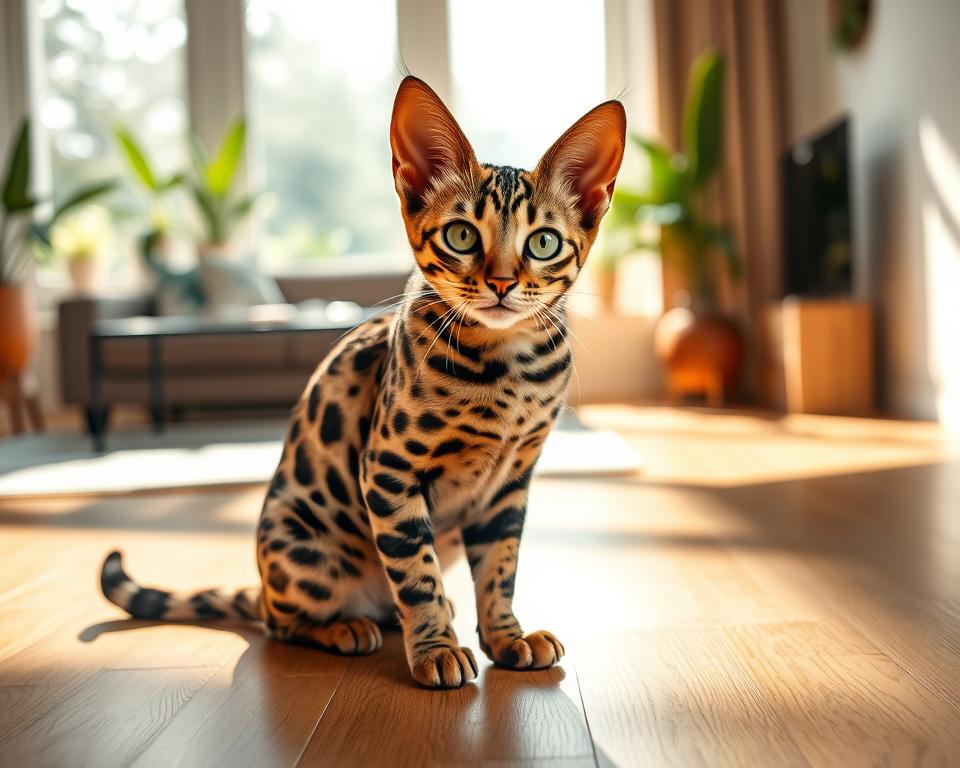
savannah house cat

Savannah House Cat: Exotic Feline Companion Guide

0

What if you could experience the wild beauty of an African safari right in your own living room? The savannah house cat offers this extraordinary opportunity, blending exotic appearance with surprisingly affectionate domestic qualities.

These magnificent felines emerged in the 1980s through crossing African Servals with domestic breeds. Their striking features include a tall, athletic build, distinctive dark spotting patterns, and remarkably large, radar-like ears that give them an alert, wild appearance.

Beyond their exotic looks, these remarkable pets possess extraordinary intelligence and energy levels. Many owners describe them as displaying dog-like behaviours, including playing fetch and comfortably walking on leashes. Their lifespan typically ranges from 12-20 years, with weights varying between 12-25 pounds depending on generation.

This comprehensive guide explores everything you need to know about welcoming one of these spectacular companions into your home. We’ll cover their unique temperament, care requirements, and help you determine if this special breed aligns with your lifestyle.

Key Takeaways

  • Savannahs represent a hybrid breed originating from African Servals and domestic felines
  • They feature distinctive physical traits including tall stature and large, expressive ears
  • These highly intelligent pets often display dog-like behaviours and require mental stimulation
  • Proper care demands active ownership with commitment to exercise and engagement
  • Their lifespan typically extends 12-20 years with appropriate care and attention
  • Understanding generations and breeding is crucial for prospective owners
  • Successful ownership requires matching their energetic personality with suitable home environments

Understanding the Savannah House Cat Breed

Delving into the fascinating world of these extraordinary felines reveals a captivating blend of wild heritage and domestic companionship. Their unique background and striking physical attributes make them truly remarkable pets for the right household.

Origin and History of Savannah Cats

The development of this distinctive breed began during the 1980s through innovative breeding programmes. Breeders crossed African Servals with various domestic breeds to create a feline with exotic appearance but manageable temperament.

This intentional hybridisation resulted in the scientific classification Felis catus Ă— Leptailurus serval. The breeding purpose focused on achieving a wild cheetah-type appearance while maintaining suitable personality traits for family life.

When the breed achieved Championship status with TICA (The International Cat Association), all outcrossing ceased. The breed standard now requires all traits to mimic those of its African Serval ancestor while ensuring excellent temperament.

Unique Characteristics and Appearance

These magnificent creatures possess an athletic, tall build that makes them appear larger than their actual weight suggests. Their long legs and slender frame contribute to an elegant, wildcat silhouette.

A Savannah cat sitting gracefully in a sun-drenched living room, showcasing its striking spotted coat and large ears with a hint of wild elegance. The foreground highlights the cat’s athletic build and captivating eyes, while fine fur textures are emphasized in soft, natural light. In the middle, a stylish cat tree and plush cushions reflect a cozy domestic environment. In the background, a window with sheer curtains allows soft sunlight to pour in, creating an inviting and warm atmosphere. The colors are rich and vibrant, emphasizing the exotic yet approachable nature of the Savannah breed. The mood is tranquil and playful, capturing the essence of a cherished feline companion. Use a high-quality lens to ensure sharp detail and depth of field.

The coat displays stunning patterns with solid dark spots that flow across the body. These markings should not connect, creating a beautiful contrast against the background colour.

Remarkably large ears sit high on the head with rounded tips, resembling those of African Servals. These impressive ears feature ocilli markings behind them – high-contrast patterns that mimic eyes to deter predators.

Feature Description Breed Standard Requirement
Coat Colours Brown, silver, black and smoke variations Must mimic African Serval’s natural colours
Eye Characteristics Medium-sized with slightly hooded brow Set underneath brow with tear stain markings
Head Shape Broad, modified wedge with rounded contours Must maintain wild appearance proportions
Body Structure Tall, lanky build with long legs Should appear larger than actual weight

Their eyes are medium-sized and set under a slightly hooded brow, often accompanied by dark tear stain markings between eyes and nose. This distinctive facial feature enhances their exotic appearance while maintaining expressive qualities.

The breed standard meticulously preserves these wild traits while ensuring the animals remain suitable as domestic companions. This careful balance makes them truly unique among feline breeds available today.

Savannah Cat Generations Explained

Understanding the generation system is crucial when considering these magnificent felines. The classification system reveals how closely related each animal remains to its wild African Serval ancestry.

A vivid depiction of Savannah cat generations, showcasing four distinct generations from F1 to F4. In the foreground, an elegant F1 Savannah cat with a sleek, spotted coat and large ears is playfully interacting with an F2 Savannah, characterized by its larger build and distinct patterns. In the middle ground, an F3 and F4 Savannah cat sit side by side, displaying their unique traits: the F3 with a slightly smaller frame and the F4 exhibiting more domestic features. The background features a soft, sunlit landscape reminiscent of the African savannah, with acacia trees and tall grasses. The scene is illuminated with warm, golden hour lighting, capturing a serene and harmonious atmosphere, perfect for emphasizing the beauty and evolution of these exotic feline companions.

F1, F2, and F3 Generations: What’s the Difference?

F1 generations represent the closest connection to wild ancestry. These remarkable animals result from direct pairing between Servals and domestic breeds.

They typically stand 16-18 inches tall at the shoulder. Males often reach 17-25 pounds while females range 13-19 pounds.

F2 kittens emerge from F1 mothers bred with domestic males. They maintain impressive size with males reaching 16-25 pounds.

F3 generations offer more manageable temperaments while preserving exotic appearance. These felines usually weigh 14-20 pounds for males.

Purebred Savannah Cats and Breed Standards

Purebred specimens feature three or more generations of selective breeding. The International Cat Association granted championship status in 2012.

These animals demonstrate consistent traits and predictable temperaments. Their breeding follows strict standards to maintain breed integrity.

Generation Size Range Typical Litter Size Price Range Fertility Challenges
F1 17-25 pounds (males) 1-3 kittens £12,000+ Extremely difficult
F2 16-25 pounds (males) 1-4 kittens £4,800-£8,000 Difficult
F3 14-20 pounds (males) 2-4 kittens £2,400-£4,000 Moderate
Purebred Varies by lineage 3-5 kittens £1,200+ Average

Male sterility affects early generations due to hybrid genetics. Fertility typically returns when exotic heritage drops below 10%.

Most modern specimens contain less than 10% wild genetics. This careful breeding ensures manageable temperaments suitable for family life.

Litter sizes increase significantly in later generations. Purebred mothers typically produce 3-5 kittens per litter.

Pricing reflects breeding challenges and rarity factors. Earlier generations command premium values due to complex breeding requirements.

These magnificent creatures continue captivating enthusiasts worldwide. Their unique heritage makes them truly special companions.

Personality and Temperament Traits

When welcoming these magnificent felines into your home, you’ll discover a remarkable blend of wild charm and domestic affection. Their extraordinary character combines high-energy antics with deep loyalty, creating an engaging companion experience unlike any other.

A majestic Savannah cat with striking spotted coat sits gracefully on a plush, vibrant rug in a cozy living room. Its bright, expressive eyes reflect curiosity and intelligence, capturing the essence of a playful and social companion. In the foreground, the cat playfully swats at a colorful feather toy, highlighting its energetic nature. In the middle ground, a gently open window lets in warm, golden sunlight, creating a soft glow that enhances the inviting atmosphere. The background features shelves adorned with plants and books, suggesting a nurturing home environment. The overall mood is cheerful and lively, embodying the playful yet affectionate temperament traits of the Savannah cat, with a shallow depth of field focusing on the feline’s captivating gaze.

Energy Levels and Intelligence

These energetic companions demand regular exercise and mental challenges. Without proper stimulation, their brilliant minds can lead to mischievous behaviour.

Their intelligence rivals that of working dog breeds. They solve puzzles and learn commands with astonishing speed.

Expect impressive vertical leaps and constant exploration. These athletic pets need space to express their natural abilities.

Trait Expression Owner Response Required
High Energy Constant movement and play Daily interactive sessions
Problem Solving Opening doors and cabinets Secure childproof locks
Trainability Learning complex commands Positive reinforcement training
Curiosity Investigating everything Thorough home proofing

Social Behaviour and Family Compatibility

These social creatures form profound bonds with their human families. They actively seek interaction and participation in household activities.

Their communication includes unique chirps and hisses. Early generations particularly exhibit these exotic vocalisations.

They typically choose one or two favourite people. These bonds last throughout their 12-20 year lifespan.

According to F1 Hybrids Savannah Cats, proper socialisation from kittenhood ensures excellent family compatibility. They generally interact well with children when introduced appropriately.

Strangers might receive initial suspicion. Their curious nature usually overcomes wariness quickly.

These magnificent pets maintain kitten-like playfulness into adulthood. They bring endless entertainment and loyalty to dedicated homes.

Cost Considerations and Legal Requirements

Investing in one of these magnificent felines involves careful financial planning and awareness of legal responsibilities. Understanding both the initial costs and ongoing commitments ensures you can provide the best possible home for your new companion.

Pricing Structure Across Different Generations

The price of these extraordinary pets varies significantly based on their generation. F1 kittens command the highest prices, often exceeding £12,000 due to their close African Serval ancestry.

F2 generations typically range between £4,800-£8,000. F3 kittens usually cost £2,400-£4,000. Later generations and purebred specimens start around £1,200.

A visually striking image of a majestic Savannah cat, featuring its distinct spotted coat and large ears, positioned prominently in the foreground. The cat is perched on a stylish modern cat tree, showcasing its elegant posture. In the middle ground, display a neatly organized table with items symbolizing cost considerations, such as a stack of pet care brochures, price tags, and a calculator, evoking the financial aspect of owning a Savannah cat. The background features a softly blurred living room setting with natural light streaming through a window, creating a warm and inviting atmosphere. Use a shallow depth of field to emphasize the cat while maintaining focus on the table, capturing a professional yet cozy vibe.

Several factors influence the final price. Conformation to breed standards, temperament, and coat colouration all affect valuation. Reputable breeders invest significantly in health testing and proper socialisation.

Generation Price Range Litter Size Waiting Period Additional Costs
F1 £12,000+ 1-2 kittens 1-3 years £800-£1,200
F2 £4,800-£8,000 1-4 kittens 6-18 months £600-£900
F3 £2,400-£4,000 2-4 kittens 3-12 months £400-£700
Purebred £1,200+ 3-5 kittens 1-6 months £300-£500

Initial costs include vaccinations, microchipping, and spaying/neutering. Reputable breeders retain kittens until 10-14 weeks for proper development.

Breeding challenges contribute to high prices. Small litter sizes and unpredictable heat cycles make production difficult. F1 females may only cycle every other year.

UK Legal Considerations for Hybrid Cats

Currently, the United Kingdom maintains no specific restrictions on these hybrid felines. Owners should stay informed about potential legislative changes regarding exotic pet ownership.

Purchasing from TICA-registered breeders ensures proper documentation and health guarantees. These breeders follow ethical practices and provide registration papers.

Specialised pet insurance is highly recommended for these high-value animals. While not legally required, it provides financial protection against unexpected veterinary costs.

Ongoing ownership expenses include premium food, regular veterinary care, and enrichment toys. Earlier generations often require more specialised care and larger living spaces.

Prospective owners should research local regulations before committing. Some areas may have specific requirements for keeping hybrid animals.

Choosing the right generation affects both initial investment and long-term expenses. Consider your budget and lifestyle when selecting your perfect companion.

Caring for Your Savannah House Cat

Providing exceptional care for these magnificent companions requires understanding their unique needs and energetic nature. Proper attention to diet, exercise, and socialisation ensures your feline friend thrives throughout their 12-20 year lifespan.

A cozy indoor scene depicting the care requirements for a Savannah house cat. In the foreground, a playful, spotted Savannah cat is interacting with a colorful assortment of toys, such as feather wands and laser pointers. In the middle, a well-organized cat care corner features a plush cat bed, a tidy feeding area with high-quality cat food, and a clean litter box, all in soft, inviting colors. The background highlights a sunny window with curtains partially drawn, allowing warm, natural light to illuminate the scene, enhancing the welcoming atmosphere. The overall mood is cheerful and nurturing, capturing the essence of being a responsible pet owner while focusing on the vibrant personality of the Savannah cat.

Dietary Needs and Exercise Requirements

These active pets demand high-quality nutrition to support their rapid growth and energy levels. Their diet should feature premium protein sources with minimal fillers.

Avoid budget supermarket foods that lack proper balance. These inferior options can cause digestive issues and long-term health problems.

Many owners choose carefully prepared raw meat diets for optimal nutrition. Always consult your veterinarian about meal frequency and portion sizes.

Daily exercise is non-negotiable for these energetic companions. They require interactive play sessions and opportunities for climbing.

Puzzle feeders provide excellent mental stimulation. Vertical spaces allow natural jumping behaviours.

Training and Socialisation Techniques

Early socialisation creates confident, well-adjusted companions. Expose kittens to various people and environments using positive reinforcement.

Leash training works wonderfully with patience and consistency. Begin with short harness introduction sessions indoors.

“The combination of exercise and socialisation builds remarkable bonds with these intelligent pets.”

Most develop excellent litter box habits when provided with clean, accessible facilities. Some may show interest in plastic shopping bags if left available.

Veterinary visits require special consideration for early generations. Positive first experiences make future appointments less stressful.

Environmental enrichment includes cat trees, window perches, and interactive toys. Safe outdoor access provides valuable stimulation when properly supervised.

These magnificent creatures reward dedicated owners with unparalleled companionship. Their unique needs make proper care essential for harmonious living.

Conclusion: Is a Savannah Cat Right for You?

Deciding to welcome one of these extraordinary felines into your life requires careful self-assessment. These magnificent companions demand active engagement and substantial time investment from their caregivers.

Ideal owners possess experience with energetic breeds and understand feline behaviour. They provide daily enrichment, proper training, and consistent socialisation.

Remember that behavioural challenges often reflect inadequate care rather than inherent wildness. These intelligent pets thrive with structured routines and positive reinforcement.

Consider your ability to meet their needs throughout their 12-20 year lifespan. Properly cared for, they offer unparalleled companionship and endless fascination.

Thorough research and breeder consultations ensure successful adoption. Matching generation traits to your lifestyle creates harmonious long-term relationships.

FAQ

What makes these felines different from other domestic breeds?

These striking pets boast a wild appearance, tall ears, and long legs, inherited from their serval ancestors. They are known for their high energy, intelligence, and dog-like loyalty, making them a truly unique addition to any home.

Are there any legal restrictions on owning one in the UK?

Yes, ownership laws can vary. In the UK, later generations (typically F4 and beyond) are generally considered domestic and have fewer restrictions. However, it is crucial to check with your local council regarding any specific bylaws or licensing requirements before bringing one home.

How much exercise does one typically need?

They possess tremendous energy and require significant daily engagement. Plan for active play sessions, puzzle toys, and even harness training for safe outdoor exploration to keep them mentally and physically stimulated.

Are they good with children and other pets?

When properly socialised from a young age, they can be wonderful, playful companions for respectful children. Their compatibility with other animals, particularly small pets, can vary greatly based on the individual’s personality and prey drive.

What should I expect in terms of overall costs?

The initial price is just the beginning. You must also budget for high-quality food, routine veterinary care, enrichment toys, and potential insurance. Investing in a well-bred kitten from a responsible breeder is essential for their long-term health and temperament.

Leave a Reply

Your email address will not be published. Required fields are marked *